PATIENTS
"At 7? But she still has baby teeth." That is, word for word, the reaction of almost every parent. And I understand it: we associate braces with the teenage years. But the right answer is surprising: the first check-up is at age 7.
It's not a whim. It's the recommendation of the leading global authority on the subject, and it follows impeccable logic.
The American Association of Orthodontists recommends the first check-up no later than age 7, and the reason is biological: by that age the first molars and some permanent incisors have come in, alongside the baby teeth. That mix gives me the first real clues about how the bite is developing.
And there's an advantage that's lost over time: at 7 the bone is still growing. Problems like a narrow palate or lack of space are corrected by guiding that growth, simply. The same problems, detected at 14, usually call for far more complex treatments.
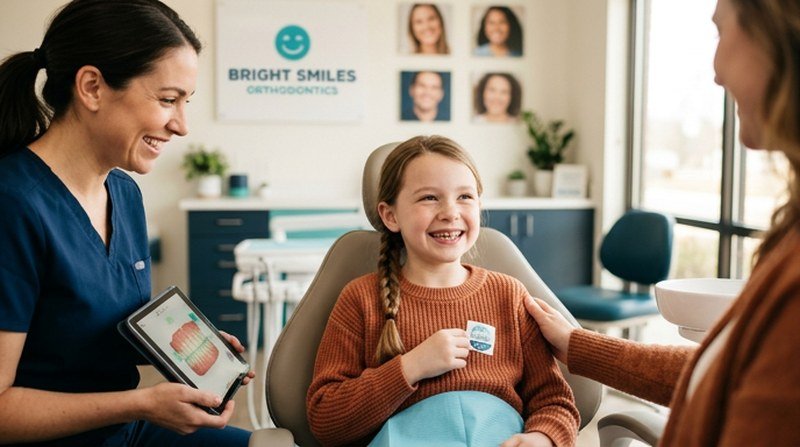
Here's what reassures almost every parent: the first visit almost never ends in braces. Most often the orthodontist simply monitors growth and only treats if and when needed. In other words: the normal outcome is to leave with an "everything's fine, see you in a year". That monitoring is the value of coming early.
And "they look straight" isn't enough: many bite problems aren't visible to the naked eye, and those are exactly the ones worth catching early.
Book the first orthodontic check-up as prevention, not as an emergency, just like the paediatric check-up. Arriving on time costs no consequences; arriving late sometimes does.
If your child is 7 or older and has never seen an orthodontist, that's the moment. Any questions, I'm here.
Book an assessment appointment and clear up all your questions with Dr. Chaparro.