PATIENTS
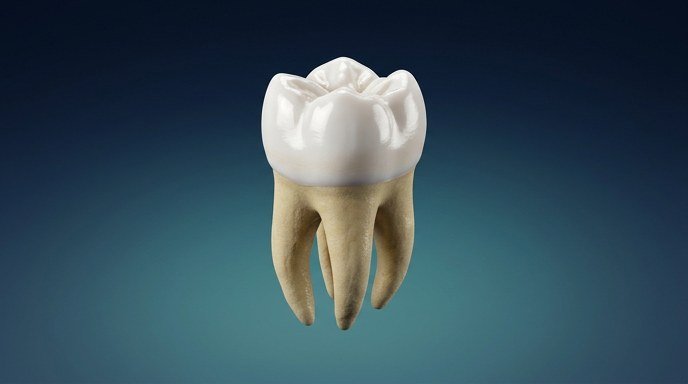
Before placing the first bracket, there's a risk almost no one talks about: root resorption. In simple terms, it's when the root of your tooth — that part you don't see, anchored in the bone — shortens during treatment. And your roots don't grow back.
Here's the idea that changes everything, and that sums up how I work: the root isn't damaged by moving the tooth; it's damaged by moving it against an obstacle. Resorption is more evident with heavy, prolonged forces in unfavourable directions. And what forces you to use heavy force? Having to push a tooth against something that's in its way.
That's why my system doesn't start by tightening. It starts by clearing the path. These are my 5 laws, in order, and they all revolve around one word: free.
Translation: remove the clashes between the upper and lower teeth.
When you bite, the cusps of one arch can collide with those of the other and lock the movement. If I try to move a tooth that bumps into its antagonist every time you close, I'm fighting against your own bite. First I eliminate those interfering contacts between arches. Without that clash, the tooth is free to move.
Translation: remove the friction between neighbouring teeth on the same side.
When there's crowding, teeth press against each other on their side surfaces. Moving one means pushing it against the one next to it: pure resistance, pure excess force. Eliminating those interferences between adjacent teeth frees each one from its neighbour's pressure.
Translation: create the space before moving.
A tooth trapped between neighbours and bone has nowhere to go; forcing it only damages its root. That's why I create the space first. With room available, the tooth moves toward a place that's already clear, not against a wall. It's the difference between opening the door before walking through… or forcing your way through.
Translation: gentle, constant force, toward where the tooth actually can go.
Once the path is clear, the tooth barely needs force. I apply light, continuous forces, directed exactly where the movement is free of obstacles. The technique, the direction and the magnitude of the forces are factors that determine resorption. Here are the three in your root's favour: little, constant and well directed.
Translation: lock in the result so it doesn't come back.
Moving the tooth is half the work; keeping it there is the other half. Active, well-planned stabilisation prevents relapse (teeth returning to their previous position). If they relapse, you'd have to move them again… and expose the root again. Stabilising well the first time is also protection.
Notice that in none of the 5 laws is the key word "tighten". It's release: release from clashes, from friction, from confinement, from poorly directed forces. That's the difference between orthodontics that drags and orthodontics that guides.
So when you choose an orthodontist, ask the uncomfortable question: "how are you going to protect my roots during treatment?". If the answer is clear, you're on the right track. If they look at you strangely for asking, get a second opinion.
Protecting your roots isn't an extra in my practice: it's the order in which I work from day one. If you'd like, let's review your case.


Book an assessment appointment and clear up all your questions with Dr. Chaparro.